Johri Enclave Metro Station is an elevated metro station on the Pink Line of the Delhi Metro, serving Johri Enclave and surrounding residential areas near the Delhi–Uttar Pradesh border. The station is located along the Loni Road corridor and provides an important public transport option for residents of Johri Enclave, Johripur, Gulab Vatika, Indra Enclave and nearby parts of Ghaziabad and northeast Delhi. The area around the station is predominantly residential, with neighbourhood markets, schools, healthcare services, food outlets and small businesses. From a business perspective, the station’s commuter movement and surrounding residential population create opportunities for retail, food, healthcare, education and other everyday services.
Quick Information
| Information | Details |
| Location | Johri Enclave, near Loni Road |
| Region | Delhi NCR |
| District | Ghaziabad |
| State | Uttar Pradesh |
| PIN Code | 201102 |
| Area Type | Residential and mixed-use |
| Metro Line | Pink Line |
| Station Type | Elevated |
| Nearby Areas | Johri Enclave, Johripur, Gulab Vatika, Indra Enclave, Jawahar Nagar |
| Major Road | Loni Road |
| Known For | Metro connectivity and access to surrounding residential colonies |
Where Is Johri Enclave Metro Station Located?
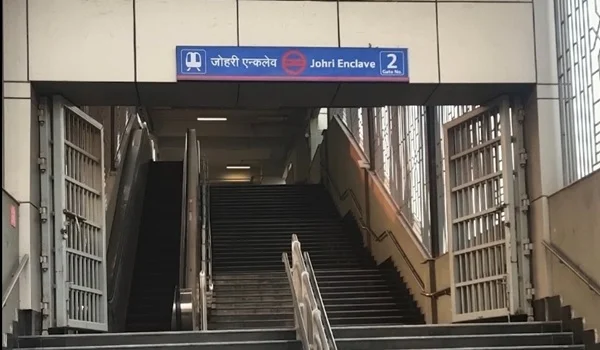
Johri Enclave Metro Station is located near Loni Road in the Gulab Vatika and Jawahar Nagar area of Ghaziabad, Uttar Pradesh. The station serves several residential colonies situated close to the Delhi–Uttar Pradesh border.
Important nearby localities include Johri Enclave, Johripur, Gulab Vatika, Indra Enclave, Ganga Enclave, Tilak Ram Colony and Jawahar Nagar.
The station’s location makes it particularly important for people living in the surrounding colonies who need access to Delhi’s wider public transport network.
The wider area is characterised by residential development, local markets, schools, small commercial establishments and daily-use services.
Why Is Johri Enclave Metro Station Important for Businesses?
The station has business relevance because it combines regular commuter movement with a substantial residential catchment.
People using the metro may purchase food, beverages, medicines, groceries and other products before or after their journey. At the same time, nearby residents generate regular demand for neighbourhood services.
Businesses can potentially serve:
- Daily commuters
- Local families
- Students
- Office employees
- Residents of surrounding colonies
- Property owners and tenants
- Customers travelling through the area
The strongest commercial opportunities are therefore likely to be businesses focused on convenience, repeat purchases and everyday services.
Local Markets and Shopping
The commercial environment around Johri Enclave Metro Station is primarily local and neighbourhood-oriented.
Residents can find various everyday businesses in the surrounding streets and market areas, including:
- Grocery stores
- General stores
- Fruit and vegetable shops
- Pharmacies
- Bakeries
- Tea and snack outlets
- Restaurants
- Mobile shops
- Electronics repair businesses
- Salons
- Hardware and electrical shops
- Household service providers
The station itself is primarily a transportation facility rather than a major shopping destination. Its commercial importance comes from the pedestrian movement it generates for nearby businesses.
A shop located on an active approach road or close to the station’s pedestrian movement can have a different commercial potential from one located deeper inside a residential lane.
Offices and Professional Services
Johri Enclave is not a major corporate office district. However, the surrounding residential population supports a range of small professional and service businesses.
Potential business categories include:
- Real-estate consultants
- Insurance services
- Accountants
- Tax consultants
- Documentation services
- Travel services
- Education consultants
- Digital-service providers
- Property-management services
- Small consultancy offices
Businesses that depend mainly on local customers, referrals and appointments can be appropriate for the area.
Large corporate offices requiring extensive commercial infrastructure are generally better suited to established office hubs elsewhere in Delhi NCR.
Connectivity
Metro Connectivity
Metro connectivity is the biggest advantage of Johri Enclave.
Johri Enclave Metro Station is located on the Pink Line of the Delhi Metro. The station connects the surrounding residential areas with the wider Delhi Metro system.
The Pink Line provides access towards important parts of northeast and east Delhi, while interchange opportunities allow passengers to connect with other metro corridors.
For employees and customers, this significantly improves accessibility compared with relying only on road transport.
Road Connectivity
The station is located near Loni Road, an important road corridor for the surrounding neighbourhoods.
Road connectivity provides access towards Johri Pur, Gulab Vatika, Loni, Gokulpuri and other nearby areas.
Auto-rickshaws, e-rickshaws, buses and app-based taxis are useful for last-mile travel between residential colonies and the metro station.
Bus and Local Transport
Road-based public transport remains important for residents who live beyond comfortable walking distance from the station.
Buses, auto-rickshaws and e-rickshaws help connect the station with nearby colonies and markets.
For businesses, this wider transport network can increase the potential customer catchment beyond the immediate surroundings of the metro station.
Metro Route and Interchange Connectivity
Johri Enclave is part of the Pink Line and is positioned within the northeast Delhi section of the metro network.
The station provides connectivity towards nearby stations such as Gokulpuri and Shiv Vihar. Passengers can also use interchange points on the wider network to reach central Delhi, east Delhi, south Delhi and other parts of the National Capital Region.
This makes Johri Enclave more useful as a business location than a neighbourhood that depends exclusively on local road transport.
Nearby Business and Commercial Areas
| Nearby Area | Business Relevance |
| Johripur | Local retail, residential demand and daily-use services |
| Johri Enclave | Residential customer base and neighbourhood commerce |
| Gulab Vatika | Residential and local service businesses |
| Loni | Large residential, retail and service catchment |
| Gokulpuri | Retail, transport and neighbourhood commercial activity |
| Maujpur | Important transport and commercial area |
| Yamuna Vihar | Established residential and commercial market |
| Shahdara | Major retail, transport and commercial centre |
These surrounding areas create a wider market for businesses operating near Johri Enclave Metro Station.
Healthcare, Education and Essential Facilities
The surrounding neighbourhood has basic facilities required by local residents.
These include:
- Clinics
- Pharmacies
- Diagnostic services
- Schools
- Coaching centres
- Tuition services
- Banks and ATMs
- Grocery stores
- Restaurants
- Fitness centres
- Repair services
- Household service providers
Schools and coaching centres in the wider Johri Pur and Jawahar Nagar areas contribute to demand for stationery, food, transportation and educational services.
For specialised medical care and larger institutional requirements, residents may need to travel to larger healthcare and commercial centres in northeast Delhi or Ghaziabad.
Residential and Commercial Character
The area around Johri Enclave Metro Station is primarily residential with supporting neighbourhood commerce.
The metro station has improved accessibility for the surrounding residential colonies. This has also made the area more suitable for businesses that rely on commuter and residential customers.
Commercial activity is generally concentrated around:
- Main roads
- Metro approaches
- Local markets
- Busy residential streets
- Transport points
The locality is not a conventional corporate business district or industrial area.
Business Opportunities Near Johri Enclave Metro Station
Food and Beverage
Tea shops, breakfast outlets, cafes, bakeries, quick-service restaurants and takeaway businesses can benefit from both commuters and residents.
Grocery and Convenience Retail
Grocery stores, general stores and convenience outlets can serve regular household requirements.
Healthcare
Pharmacies, clinics, diagnostic collection centres and wellness services can address local demand, subject to required permissions.
Education
Tuition centres, coaching classes, computer institutes and skill-development centres can target students from surrounding residential areas.
Mobile and Electronics Services
Mobile repair, accessories, electronic repair and small technology-related businesses can benefit from regular neighbourhood demand.
Property Services
Property dealers, rental consultants, documentation services and property-management businesses can serve homeowners, landlords and tenants.
Personal Services
Salons, grooming centres, laundry services and fitness businesses can generate repeat customers from nearby households.
Things to Check Before Starting a Business
Before opening a business near Johri Enclave Metro Station, entrepreneurs should carefully evaluate:
- Pedestrian footfall
- Distance from the metro entrance
- Road visibility
- Parking availability
- Competition
- Residential density
- Customer spending patterns
- Delivery access
- Property-use permissions
- Electricity and water arrangements
- Required licences
- Rent or purchase cost
- Local demand
Being close to a metro station does not automatically guarantee strong business performance. The exact location of the premises, frontage, visibility and pedestrian movement can have a major impact.
Is Johri Enclave Metro Station Good for Business?
Johri Enclave Metro Station can be a suitable location for small and medium-sized businesses serving commuters and the surrounding residential population.
Its main advantages are:
- Pink Line metro connectivity
- Established residential catchment
- Road connectivity through Loni Road
- Availability of local transport
- Access to surrounding residential colonies
- Regular demand for everyday products and services
The locality is particularly suitable for food outlets, grocery stores, pharmacies, coaching centres, mobile shops, salons, property services and small professional businesses.
However, businesses targeting luxury customers, large corporate clients or requiring extensive commercial space may find more suitable locations elsewhere.
FAQs
Where is Johri Enclave Metro Station located?
Johri Enclave Metro Station is located near Loni Road in the Gulab Vatika and Jawahar Nagar area of Ghaziabad, Uttar Pradesh.
Which metro line serves Johri Enclave?
Johri Enclave Metro Station is located on the Pink Line of the Delhi Metro.
What is the PIN code of Johri Enclave?
The commonly associated PIN code for the Johri Enclave area is 201102.
Which areas are near Johri Enclave Metro Station?
Nearby areas include Johri Enclave, Johripur, Gulab Vatika, Indra Enclave, Jawahar Nagar and other residential colonies around Loni Road.
Is Johri Enclave Metro Station good for business?
It can be suitable for businesses serving commuters and local residents, particularly food, retail, healthcare, education and personal-service businesses.
What businesses can work near Johri Enclave Metro Station?
Grocery stores, restaurants, cafes, pharmacies, coaching centres, mobile shops, salons, property services and other neighbourhood-focused businesses can be suitable.
Final Thoughts
Johri Enclave Metro Station is an important Pink Line metro station serving the residential areas around Johri Enclave, Johripur, Gulab Vatika and Jawahar Nagar. Its strongest advantage is the public transport connectivity it provides to residents of this part of the Delhi NCR region.
From a business perspective, the location is best suited to commuter-oriented and neighbourhood businesses. Food outlets, retail stores, pharmacies, education services, mobile shops, property services and personal-care businesses can all find relevance in the surrounding market.
For entrepreneurs, the exact property remains important. Pedestrian movement, visibility, accessibility, competition, parking, permitted use and local demand should be assessed before committing to a commercial premises.